As Baptists we definitely prepare our services and sermons. However, due to the absence of liturgy and our extempore tradition, our language is largely unscripted and from the hip.
A small minority of people find themselves in possession of a combination of a large vocabulary and a sharp wit and can craft beautiful sentences using elegant language. Most of us are not able to pull off profound and beautiful speech off the cuff.
The result is common and garden variety language, devoid of the beauty. The words tht come out are whatever we can think of in that moment. For most Baptist churches the days of hymns with their profound language are over. Remember when the lyrics of praise and worship songs were crafted using the full force of language?
Immortal, invisible, God only wise,
in light inaccessible hid from our eyes,
most blessed, most glorious, the Ancient of Days,
almighty, victorious, thy great name we praise.
Our poverty of language robs us of critical elements of worship and contemplation. If we are open to questioning and challenging the assumptions behind the forms of worship we’ve settled on in the contemporary Baptist tradition, we could possible unlock hidden treasures that can expand and enrich our concept and experience of corporate worship.
Messing with the system
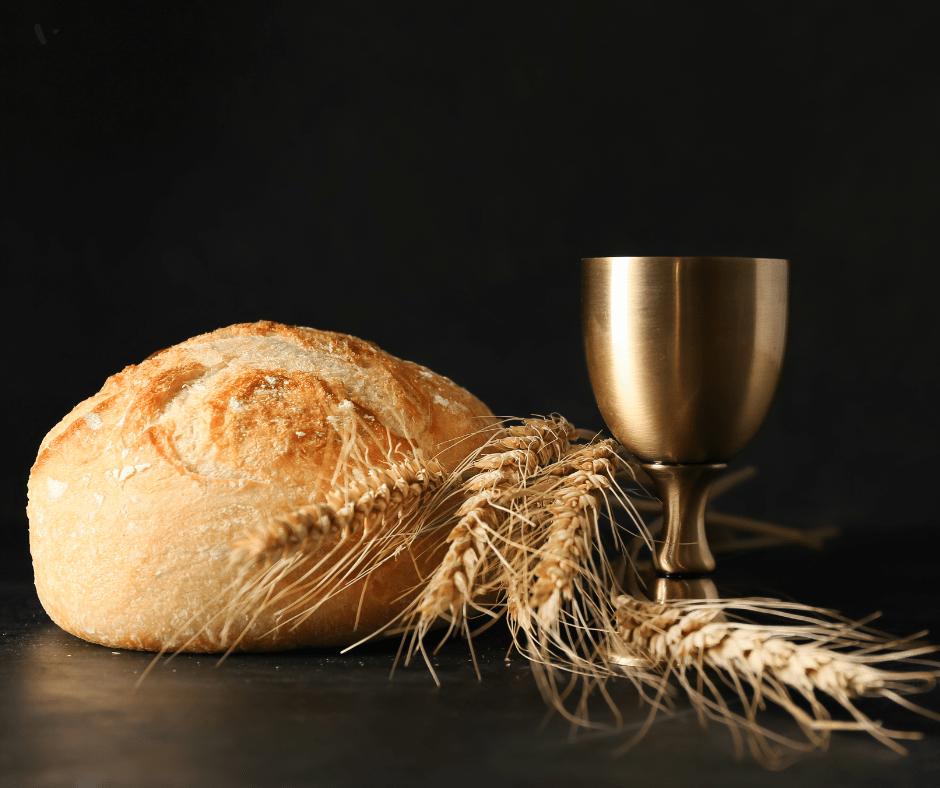
In my pastoral ministry I tried as much as was tolerable to introduce forms of liturgy to expand on the basic forms of corporate worship that limit us as Baptists. One key area of concern for me was communion. I find that the typical Baptist communion service is devoid of opportunity for contemplation and mystery. We don’t do mystery. Everything in our evangelical Baptist world is cut and dried and squared away in neat doctrinal bento boxes. There is an explanation for everything, and we can suck the mystery out of anything.
If time is set aside for communion rather than a now common bolt-on on to the end of a sermon or service, the typical format consists of small sermon to muse on the meaning of communion. Following a scripture reading the elements are distributed, and the elements may be held so that everyone can eat and drink in unison.
I dared to change this by incorporating visual, aural, physical and liturgical elements. Communion began with an approach that included an opportunity for confession and assurance of forgiveness. The invitation to the table was a corporate reading:
We come to this table, not because we must but because we may,
not because we are strong, but because we are weak.
We come, not because any goodness of our own gives us a right to come,
but because we need mercy and help.
We come, because we love the Lord a little and would like to love him more.
We come, because he loved us and gave himself for us.
We come to meet the risen Christ, for we are his Body.
The distribution of elements involved people coming forward from their seats, and other aspects of the service used scripture, visual and musical elements. Most people responded well to this way of observing communion, and some found it to be profound and would ask for me for copies of the communion service words. Early on though, a church member fixed with a furrowed brow approached me and announced that
“If I wanted to go to an Anglican church I’d go to an Anglican church!”.
Baptist churches in Australia by and large are liturgy free. Whilst there are some who use liturgy, they are the exception to the norm – extempore speech rules. Many of the exceptions to the norm are typically found in Victoria, especially Melbourne, which has the biggest diversity of Baptist churches in Australia.
If Baptists were in charge of Anzac Day, the time honoured Ode to Remembrance would be different every year. The Ode would be whatever words came to mind of the pastor leading it. Unfortunately, the extempore form doesn’t afford us the full impact and beauty of well chosen language.
One of the longest surviving websites I have followed is the UK based Ship of Fools, a satirical website based mainly in the Anglican tradition that calls itself the “magazine of Christian unrest”. ‘We’re here for people who prefer their religion disorganized,’ says the Ship’s editor and designer, Simon Jenkins. ‘Our aim is to help Christians be self-critical and honest about the failings of Christianity, as we believe honesty can only strengthen faith.
It has a unique feature called ‘Mystery Worshipper’:
The Mystery Worshipper is a Ship of Fools project that we launched in 1998. That’s when we started to send out volunteers to take part in church services worldwide, from Singapore to San Francisco, from Brisbane to Bombay, to file a first-timer’s impression of how it was to be in church that day.
The Mystery Worshipper arrives at the average local church incognito, looking just like an ordinary visitor. They join in wholeheartedly with the singing and worship. They listen thoughtfully to the sermon. They attempt to mingle with people during the after-service cup of tea. And then they go away and write a witty and thoughtful report on the whole experience.
There are just a few simple rules, the most important of which is that they have to visit a church where they are not known. As the book of Hebrews says: ‘Be not forgetful to entertain strangers: for thereby some have entertained angels unawares.’
The Mystery Worshipper comes like a thief in the Nunc Dimittis, and then tells our readers what it was like to actually be there, in that church, on that particular Sunday. They answer the questions that go to the heart of church life. Such as…
How long was the sermon?
How hard was the pew?
How warm was the welcome?
How cold was the coffee?
How much was it like heaven?
How much was it like… er… the other place?Every Mystery Worshipper comes equipped with the Mystery Worshipper calling card, which they drop into the offertory plate during the collection. The message is simple: ‘You have been blessed by a visit from the Mystery Worshipper. Read about your church soon on shipoffools.com.’
For an example of a ‘mystery worship’ carried out on an Australian church click here. One of the key stand-outs over the years of reading the reports for me is the difference between how services start and finish in the Baptist tradition vs the rest, and in particular, the comparison between the first words spoken.
In traditions that use liturgy, the first words heard are usually a call to worship which may be scriptural or liturgical:
Give thanks to the LORD, for he is good,
for his steadfast love endures forever.
Give thanks to the God of gods,
for his steadfast love endures forever.
Give thanks to the Lord of lords,
for his steadfast love endures forever.Psalm 136:1-3
A typical Baptist service may start with:
“Can all those people up the back join us down the front”, or “tap, tap, tap – does the mic work?”, or a worship leader giving a casual welcome drowned out by the opening bars of the first song.
The end of services differ greatly as well. The Baptist farewell is usually a “thanks for coming, looking forward to seeing you next week, please stay around for a coffee…”, drowned out by an enthusisatic rendering of the final song.
Liturgical churches end with a benediction and/or a doxology, which is often sung.
Benediction
Now to him who is able to do far more abundantly than all that we ask or think, according to the power at work within us, to him be glory in the church and in Christ Jesus throughout all generations, forever and ever. Amen.—Ephesians 3:20–21
Doxology
“Praise God, from whom all blessings flow;
Praise him, all creatures here below;
Praise him above, ye heav’nly host;
Praise Father, Son, and Holy Ghost.”
Blind Allegiance
It may suprise you but us Baptists here in Australia used to be very liturgical. The Rev Nathan Nettleton from South Yarra Community Baptit Church has done some excellent research into Bapitst liturgy and writes:
“Until recent decades, the use of set orders for worship and at least some set liturgical elements was the norm in Baptist churches. Baptist worship in Australia 100 years ago usually included chanted psalms and sung liturgical refrains such as the “Sanctus” and the “Gloria Patri”, and Yes, they even called them by those Latin names!” Source
The reason for our blind allegiance to an extempore tradition dates back a long way to our origins in the reformation and the emergence of the non-conformist tradition. More recently it stems from two particular developments. In his paper ‘Baptist Worship in Ecumenical Perspective’, Nettleton traces our contemporary Baptist forms of worship to some key historical influences:
- The Reformed Service of the Word, incorporating hymn singing, prayers, scripture and preaching.
- The Revivalist Service, which included the primacy of preaching and an altar call.
- The Contemporary Praise-and-Worship emerging in the latter half of the tentieth century.
Read his excellent paper here and check out the fascinating story behind the journey towards liturgical worship forms at South Yarra Community Church here.
Where to from here?
I’m realistic enough to acknowledge that we will never migrate to a fully liturgical form of worship, and nor should we necessarily. We can however incorporate liturgical elements into our worship service framework, and challenge the Hillsong style worship leader song & sermon sandwich.
One key thing missing in the worship life of many Baptist churches is the willingness to interrogate the how and why we do things. Ask a Catholic why they do any particular thing in their service, or an Anglican, and you’ll get an expansive answer. Ask a Baptist why we have song & sermon sandwiches and the best you’ll get is that “we’ve always done it this way.”
A combination of the flexibility and warmth of extempore speech with well chosen liturgy can enhance our patterns of worship. There is much beauty in language, and our worship of God should cause us to strive to use language powerfully.
 Neobaptist
Leave a comment