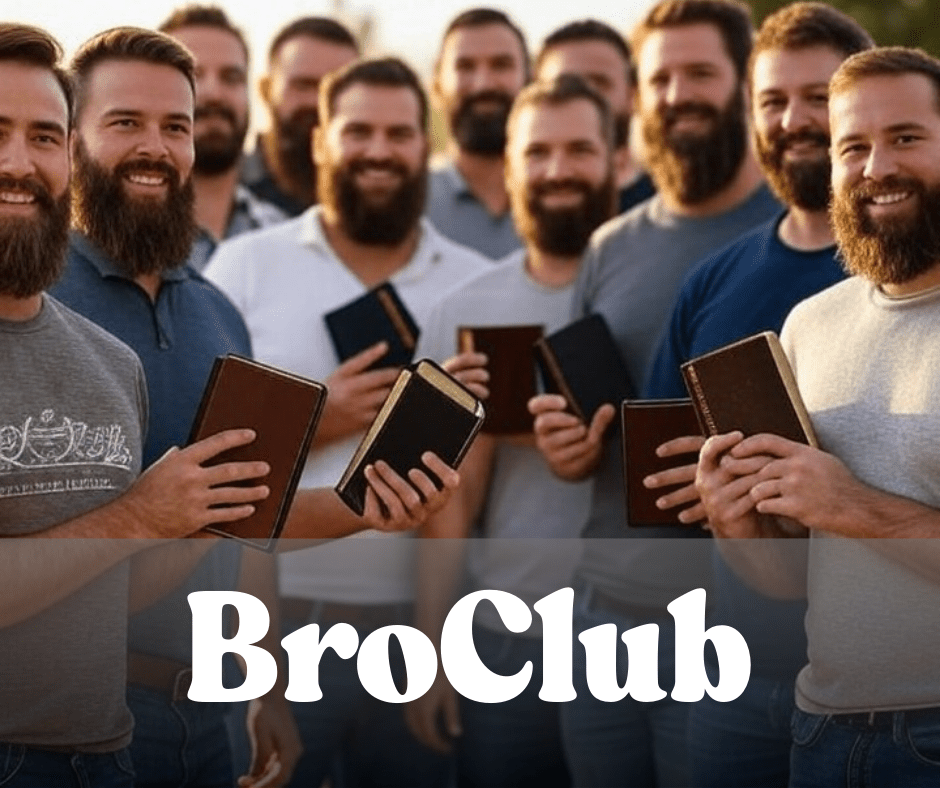
For the last few months, it seems as if the world has been turned upside down by a Bro Club that has descended on Washington DC and depending on your political leanings have either begin to drain the swamp or trash the joint – and by joint, I’m talking on a wider scale than just Capitol Hill. Claims have been made that the recent Federal election here in Australia had a Trump factor shaping the vote.
In many Baptist settings, the phrase “bro club” is a tongue-in-cheek shorthand for something serious: the informal networks of male pastors and leaders who hold disproportionate influence in decision-making, ministry opportunities, and denominational culture. These networks often operate quietly but effectively, shaping who gets heard, who gets promoted, and who feels they belong.
There are certain bro clubs you either want to be in or have good relations with, if you want to progress in your career. There are certain people you don’t want to cross. ‘Crossing’ a powerful bro or bro club may be as simple as questioning the wisdom of a decision. If the powerful Bro’s feel that you have an independent mind you are marked. In the words of a recent message I received after subjecting some powerful Bro’s to embarrassing questions in an online meeting: “You’ve marked your papers.”
The Shape and Scope of the Bro Club
I belong to a few bro clubs. They tend to be with people who don’t drink the Kool-Aid and aren’t afraid to question the status quo or toe the line with power brokers. While rarely intentional or malicious, Baptist bro clubs often emerge from shared experiences: Bible college cohorts, ministerial fraternities, local pastor gatherings, denominational boards, Messenger groups among “the lads, non-Kool-Aid drinkers, etc.”
These networks tend to form along lines of gender, age, theology, and race. They’re built on trust, familiarity, and often a shared cultural shorthand that makes collaboration easy and fast-moving.
They can be particularly influential in denominations like the Baptists, where governance is local and relationship-driven, but wider influence still comes through denominational committees, conference platforms, and church planting networks. In these spaces, bro clubs sometimes act as gatekeepers often without recognising it, sometimes not even trying to hide it.
Where They Help
Not all effects of these networks are negative. At their best, bro clubs offer pastoral care, professional development, and peer support in what can be an isolating vocation. For younger or struggling pastors, these groups can be lifelines, providing advice, encouragement, or even a quiet job lead when times are tough. In some cases, they also serve as informal accountability networks.
Additionally, these relationships can streamline cooperation, especially in crisis moments. A group of pastors who trust each other can move quickly to organise shared events, respond to moral failures, or assist churches in transition.
Where They Harm
The problem is not the presence of networks, but the homogeneity of them and what happens when they become exclusive. For women in ministry, as well as men who don’t fit the mould (those who are younger, more theologically progressive, not Anglo-Australian, or from outside the “right” social circles), bro clubs can become invisible barriers to opportunity and influence. Men exist in greater numbers within formal ministry and their tendency to form exclusively male clubs excludes women.
When conference speaking slots, pastoral calls, or denominational leadership roles are quietly circulated through bro club connections, gifted women and others on the margins are often overlooked. When “fit” becomes code for familiarity, informal bias is at play and it limits the church’s vision for leadership.
There’s also a cultural dynamic at work: jokes, shared language, and even banter that signals who’s “in” and who’s not. It’s not just about exclusion from power, but from belonging. This is especially acute for women in ministry who, even when included, can feel like guests in someone else’s house: welcome, but not quite at home.
The Cost for Women
Here in Queensland, Baptist women have had a long wait for the advent of female ordination. It happened last year (read more here) after a long history of bro club blocking. In Baptist settings that have opened ordination to women, bro clubs can still function as shadow systems that limit their influence. A woman might be credentialed but never called to a senior role. She might be on paper an “equal” but not receive mentoring, invitations, or chances to lead. Others simply burn out after years of subtle exclusion or quietly shift into parachurch or secular roles where their skills are more fully recognised.
The damage isn’t just to individual careers but to the collective health of the church. When leadership lacks diversity, the church misses out on the breadth of wisdom God has given to the body. It also sends a message to younger women (and men) about what leadership looks like and who qualifies.
Bro clubs can also (and do) cover up bullying and sexual harassment. When the power structure is almost exclusively male, it’s hard for women within to seek justice. Bros often close ranks and protect each other. This means that at the heart of our leadership structures we can perpetuate a culture that is antithetical to our biblical values.
What Can Be Done
1. Acknowledge the system: The first step is naming the reality. Bro clubs aren’t just “how things work”, they’re structures with real consequences. Denominational leaders need to recognise them, not to shame those involved, but to make space for wider participation. This means auditing their own bro club memberships.
2. Widen the circles: Intentional mentoring of women and underrepresented leaders is key. This means inviting them not just into formal roles, but informal spaces: the text threads, the coffee chats, the conference planning tables. Create Colleague Clubs rather than exclusively bro clubs.
3. Audit influence: Who gets platformed? Who gets called when a big job opens? Churches and boards should ask whether their processes are truly open or just quietly recycling the usual names. Baptist denominations quite often have a two track recruitment process: behind the scenes candidates are tapped on the shoulder, whilst publivally a performative job interview process is held that always ends up choosing the ‘tapped one’.
4. Model inclusive leadership: Senior leaders need to champion the inclusion of women in visible, empowered roles. That includes public encouragement but also stepping aside when necessary.
5. Create new networks: If old networks exclude, it may be time to build new ones: mixed-gender, multi-ethnic, intergenerational. These can operate in parallel to existing ones and, over time, shift the culture.
A Better Brotherhood
True brotherhood in the church should be more than bros backing bros. It should reflect the kingdom of God where power is shared, voices are heard, and leadership is defined by character, not connection. Baptist churches, with their history of dissent and congregational autonomy, are uniquely positioned to disrupt the patterns of exclusivity, but only if they’re willing to look honestly at how things work behind the scenes.
Bro clubs aren’t necessarily bad. But if they’re not opened up, named clearly, and reformed, they’ll keep reinforcing a culture where some flourish and others are politely sidelined. The goal isn’t to dismantle friendship or fraternity, it’s to open the doors wider so that all the gifts of the body can be recognised and released.
 Neobaptist
Leave a comment